Category: Projects

Jun
24

News: Neon’s Palme d’Or Winner ‘Fjord’ Sets October Release Date (EXCLUSIVE)

Variety

“Fjord,” a searing family drama that won the Palme d’Or at Cannes Film Festival, will hit theaters in the fall.

Neon, which acquired the movie a year ago, has slated “Fjord” for Oct. 9, the same release date as the studio’s prior Palme winners including “Parasite,” “Anora” and “Anatomy of a Fall.” All of those films went on to score Oscar nominations, with “Parasite” and “Anora” landing the statue for best picture.

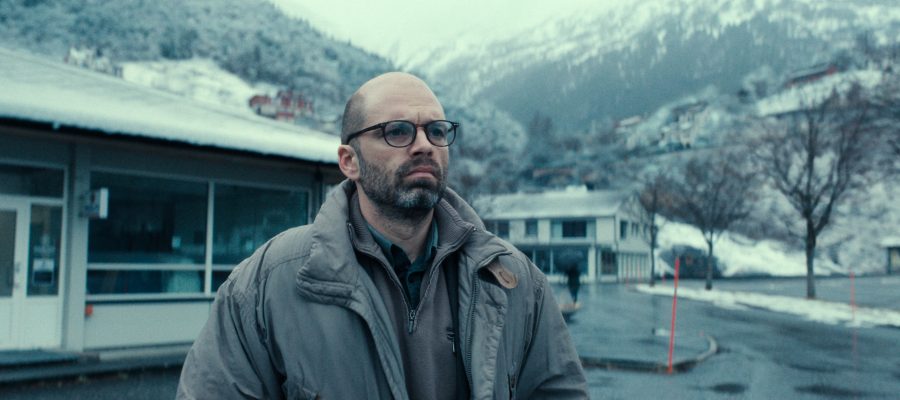
Directed by Romanian filmmaker Cristian Mungiu, “Fjord” stars Sebastian Stan and Renate Reinsve as the parents of a Romanian family with strict religious beliefs who move to a small village in Norway. When bruises are noticed on their daughter’s body at school, their five children are taken away from them and a legal saga ensues. Variety’s Guy Lodge called the film a “brilliantly knotted social drama, writing that “everything is happening at all times in ‘Fjord,’ as befits a film sharply attuned to the world’s ever-expanding possibilities for movement, misunderstanding and conflict.”

Mungiu previously won Cannes’ highest honor, the Palme d’Or, in 2007 with “4 Months, 3 Weeks and 2 Days,” and was later awarded the festival’s best screenplay prize in 2012 for “Beyond the Hills” and the best director prize in 2016 for “Graduation.”

“Fjord” extended a remarkable winning streak for Neon, which has scored a record seven consecutive Palme d’Ors starting with Bong Joon Ho’s “Parasite” and continuing with Julia Ducournau’s “Titane,” Ruben Östlund’s “Triangle of Sadness,” Justine Triet’s “Anatomy of a Fall,” Sean Baker’s “Anora” and Jafar Panahi’s “It Was Just an Accident.”

Jun
11

Photo/Video: ‘Fjord’ Trailer

An official trailer from “Fjord” has been released. Click below to view and view screen captures in the gallery.


Jun
09

Photo/Video: ‘Fjord’ Teaser Trailer

An official teaser trailer from “Fjord” has been released. Click below to view and view screen captures in the gallery.


Jun
01

News/Photos: Sebastian Stan Fills In The Blanks (Esquire Magazine)

Esquire

Note: For the accompanying photoshoot click here Session #172 – Chuck Reyes [Untagged/UHQ]

It’s 12:15am on a Friday. The room is cool and dimly lit, and I’m lounging on a beanbag, wrapped in a maroon hoodie with a computer on my lap. On my screen, my interviewee wears a black hoodie and a white baseball cap.

There aren’t many descriptors that can help visualise the spatial portrait of what goes on inside a virtual interview—especially so when you’re interviewing Sebastian Stan. He fills the display. As he leans forward over his desk, a yellow lamp catches the stray tousles of brown hair curling from beneath his cap. I opened with a question: how does he deal with the discomfort that comes from playing the characters that he does?

“I think discomfort is something we all have to deal with at various levels, but when it’s connected to work and art or being creative, it’s the kind of discomfort that I’m seeking,” he says.

Stan has built a reputation in the industry for being somewhat of a chameleon. Able to slip inside the skin of a controversial sex symbol with a soul patch in one moment, then trade that for another with an orange complexion belonging to an uncurbed president.

In one of his more recent projects, his character undergoes a radical medical procedure to reconstruct his face in Aaron Schimberg’s A Different Man, a performance that earned him a Best Actor in a Motion Picture—Musical or Comedy award at the Golden Globes. This change in physicality borders on the edge of metamorphosis, and naturally demanded a certain degree of emotional energy and vexation to fit into these characters.

For a man whose career may be known to many for playing a Marvel superhero, the road he’s taken since is quite unconventional. He has since leaned into independent cinema, television, and even playing characters that are deliberately hard to love.

Continue reading

May
26

Video/Photo: More Pre + Post Cannes 2026 Interviews (Pathe Cinemas, Art Goes On)

A few new pre + post Cannes interviews have been released.


May
26

Video: 2 Official Clips from “Fjord”

Two official clips from “Fjord” have been released. Click below to view.


May
24

News: Romanian Director Cristian Mungiu Wins His Second Palme d’Or at Cannes Film Festival for ‘Fjord’

Variety

Cristian Mungiu‘s complex moral drama “Fjord,” starring Sebastian Stan and Renate Reinsve, has won the Palme d’Or for best film at the Cannes Film Festival, making the Romanian writer-director the tenth filmmaker to win the coveted award twice — 19 years after his first victory for “4 Months, 3 Weeks and 2 Days.” The film, about a Romanian family of Evangelical Christians mired in a child abuse case when they run afoul of the Norwegian social system, was among the more hotly debated titles in the Competition, with critics split on its merits and its sociopolitical allegiances — though evidently that very discussability united a jury headed by South Korean auteur Park Chan-wook.

Mungiu was typically self-effacing as he accepted the Palme. “All awards are contextual,” he said. “The fact that you gave me this award, it’s wonderful for us and we feel very happy, but we need to wait 10, 20 years to watch these films again, and maybe then we’ll understand which of them were really good, and managed to survive the test of time.” In the post-ceremony jury press conference, meanwhile, director Park wittily dodged the question of what motivated the Palme choice: “To be completely honest, I didn’t want to award the Palme d’Or to any of the films, because it’s an award that I myself have never gotten. But I had no other choice.”

This critic was among the admirers of the film (Mungiu’s first to be set and shot entirely outside his home country), describing it as a “superb new drama of systemic order and individual disarray [that] feels immediately of a piece with his searching, bristling oeuvre, despite its crisp new setting,” and praising Stan’s and Reinsve’s “measured, tightly clenched performances.” The win also represents a major coup for “Fjord’s” U.S. distributor Neon, which has now extended its Palme-winning streak to seven years running, beginning with eventual Oscar winner “Parasite” in 2019, and will certainly buoy their future awards hopes for Mungiu’s film.

The win wasn’t entirely expected: Many thought exiled Russian director Andrey Zvyagintsev, now based in France, would triumph for his icy anti-Putin neo-noir “Minotaur,” his first film in nine years, and a major comeback following a near-fatal battle with COVID a few years ago. In the end, Zvyagintsev had to be content with the Grand Prix, the fest’s second most prestigious award, but prospects look strong for the Mubi-backed title — a contemporary reworking of Claude Chabrol’s erotic thriller “The Unfaithful Wife,” set in Russia near the star of Putin’s war on Ukraine, but shot entirely in Latvia by political necessity.

In a heavily European-dominated slate of winners, the Best Director prize was shared by two oppositely styled historical visions: “Fatherland,” Polish director Pawel Pawlikowski’s meticulous evocation of post-war Germany, and “The Black Ball,” Spanish duo Javier Calvo and Javier Ambrossi’s sprawling, stylized, era-spanning ode to queer lives and loves lost to fascism, written through the prism of Federico Garcia Lorca’s poetry.

The tie provided the most amusing moment of the awards ceremony, with the confused shuffle of the three directors on stage prompting Pawlikowski to quip, “This is a piece of disastrous mise-en-scène!” But it also served up the two most stirring speeches of the night, with the Spanish filmmakers, known locally as Los Javis, overcome with emotion as they honored their queer antecedents: “The only way we can honor the suffering, the silence, the death of the LGBTQ people that came before us, is making sure that the next generation has the same freedom or more.”

Pawlikowski, meanwhile, spoke precisely and passionately about the need for a nuanced understanding of political cinema: “We live and breath politics, and cinema should reflect that, but not on terms dictated by politicians and activists: It takes courage to resist dictators and bullies, but it also takes courage to resist noise, algorithms, peer pressure. I think writers should be able to look beyond headlines, beyond information bubbles, beyond set narratives, and to talk about what they really feel, what they really see, what they really know, what they intuit. It’s important to keep that space free for art.”

Los Javis, meanwhile, weren’t the only duo honored on a night where collaborative artistry was especially celebrated. Both acting awards went to pairs of co-stars, with Frenchwoman Virginie Efira and Japanese star Tao Okamoto (the only non-European individual to take a prize from the jury, for a culture-melding French-Japanese production) sharing the Best Actress award for their exquisitely calibrated, conversational dual turn in Ryusuke Hamaguchi’s critical darling “All of a Sudden,” as a care home manager and experimental theater director who find a deep and unexpected bond through their respective lines of work.

Meanwhile, the two young stars of Belgian director Lukas Dhont’s First World War drama “Coward” — Valentin Campagne and newcomer Emmanuel Macchia — were stunned to jointly win Best Actor for their achingly sensitive portrayals of soldiers-turned-lovers on the Western Front. Their giddy, ebullient speech, as Campagne literally leaped into his co-star’s arms, was a joyful high in the ceremony.

German director Valeska Grisebach may have been the sole Jury Prize winner for her ambitiously experimental, documentary-influenced crime drama “The Dreamed Adventure,” but she didn’t see herself that way, calling her leading lady Yana Radeva onto stage as her most invaluable collaborator. Frenchman Emmanuel Marre, meanwhile, took Best Screenplay for another of the Competition’s most strikingly unconventional works, the fractured French Resistance drama “A Man of His Time.”

In something of a surprise, the Camera d’Or for best first feature across all sections of the festival went to Rwandan filmmaker Marie Clémentine Dusabejambo for her heartfelt debut “Ben’Imana” — a happy turnaround after the film was entirely blanked by the Un Certain Regard jury last night. It was a welcome triumph for African cinema on such a Eurocentric night.

Yet in a year where American films were conspicious by their general absence — the two U.S. Competition titles, James Gray’s “Paper Tiger” and Ira Sachs’ “The Man I Love,” both left empty-handed — the awards did encapsulate the major theme of this year’s festival: of film as a global, exploratory medium, with “Fjord,” “Minotaur,” “The Dreamed Adventure,” “Fatherland” and “All of a Sudden” all either addressing themes of displacement on screen, or made by filmmakers forging connections with new countries and national cinemas.

May
24

News: Sebastian Stan On ‘Fjord’ & ‘The Batman II’

Deadline

EXCLUSIVE: Sebastian Stan is that rare breed of actor who uses his star superpower to help get movies such as Cristian Mungiu’s Palme d’Or winner Fjord made – a film that explores topics of religious intolerance and violence towards children.

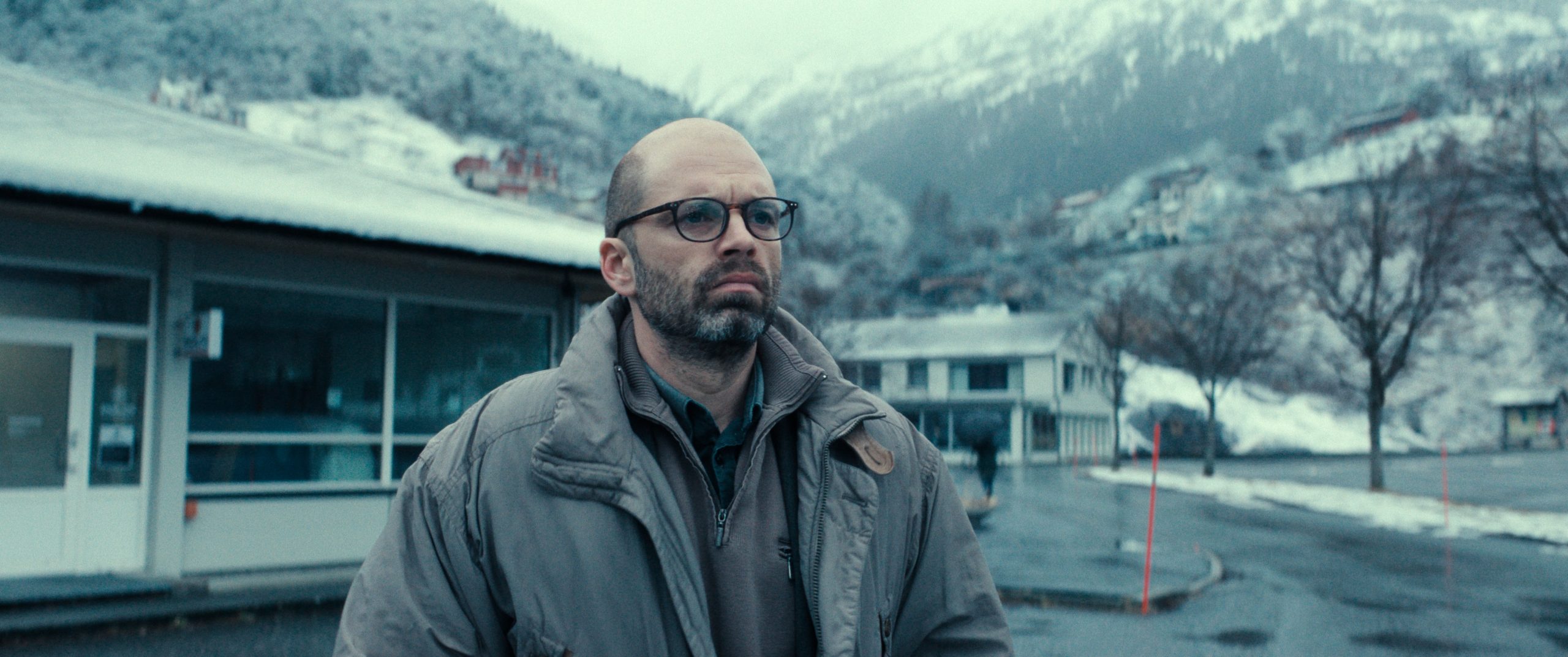
As a thespian, he will do whatever’s necessary for the character. For Fjord, he’s almost unrecognizable with his hair shaved down to his scalp and unflattering costumes that could’ve been made outta potato sacks.

Soon, he says, he’ll be in London (over summer) for Matt Reeves’ The Batman: Part II, where he’ll play “many roles in this one”

He’s referring to the character Harvey Dent, who starts off as Gotham’s crime-fighting District Attorney who descends into madness when underworld figure Sal “Boss” Maroni hurls acid in his face scarring the left side, hence the Two-Face moniker he takes up.

Having mastered the Marvel Cinematic Universe, this marks his first foray into WB’s Batman DC world.

”I’m excited, I’m nervous and trying to keep surprising myself,” he says of taking on Two-Face and working with the hair and makeup teams who have devised how his disfigurement will look.

We’ve met a few times, notably, here and at Telluride when he was travelling with The Apprentice film where he portrayed a young Donald Trump, a portrayal that garnered him a much deserved Best Actor Oscar nomination.

I can well imagine that Neon, which has Fjord in the U.S., will have the actor, and Renate Reinsve, who plays his wife in the film that’s set in small-town Norway [some might say small-minded Norway, parts of it anyway], on the next awards season cycle. In reality, the next awards season began Saturday night when the prizes were being handed out in the Grand Theatre Auditorium Louis Lumière.

Stan plays a Romanian family man who travels with his five children to live in his wife’s Norwegian hometown.

Their strong Christian beliefs become an issue with some locals and they’re accused of violence towards their children who are removed and placed with foster parents.

Having knowledge of fostering and violence towards children [my wife was once a communications director with the National Society for Prevention of Cruelty to Children], the movie struck a chord; I was totally captivated by it.

Stan says he thought it was “very brave of the jury to recognize the film in terms of just the questions it raises — this divisiveness, this inability to agree on anything and to me the film really speaks towards doubt, but not necessarily in a negative way, in a positive way that perhaps we should invite more doubt into our lives, not necessarily doubt in other people but doubting ourselves a bit and our own mindsets and our own belief systems — we could be wrong about other people. We just need to get away from extremism because it doesn’t work.“

When he came to live in the U.S. with his mother, having been raised in Romania, he was the age of the two older children in Fjord. “I was twelve and I have the most empathy for the children in the movie. All they want is to fit in and to be accepted. But when you’re an immigrant and you’re a kid, and you’ve got society telling you one thing and your parents are telling you another thing, where’s room for you [the kid] left in any of that?”

Hopefully, after he completes The Batman: Part II, he’ll take on another powerful, socially aware picture.

May
22

News/Photos: Observator News + Konbini Interview


May
21

News/Video/Photo: Sebastian Stan Says Cristian Mungiu’s ‘Fjord’ With Renate Reinsve Prompts Audience Reflection “And That’s What’s More Important” – Cannes Studio

Deadline (This interview includes video at the link)

Note: For Screencaps of this interview click here.

During a break from shooting The Batman: Part II in the U.K, Sebastian Stan sat down with Deadline at Cannes to chat about his latest film Fjord, which premiered at the festival last week in Competition and received an extraordinary 12-minute standing ovation.

Speaking alongside co-star Renate Reinsve and 2007 Palme d’Or-winning writer-director Cristian Mungiu, Stan mused on his decision to take on risky roles — in 2024 he played Trump in The Apprentice, and now, in Fjord he is a deeply religious man who admits to occasionally slapping his children.

“I just love that the movie wasn’t necessarily telling you exactly what to think or how to feel, but really just presenting you the situation and making you think,” he said. “I think for people that go see the movie at the end when they walk out of it, they’re going to have a moment with themselves where they’re actually reflecting about what came up for them when they were watching the movie and that’s what’s really more important.”

In the film, based on the experiences of a real-life Romanian family, Stan and Reinsve play Mihai and Lisbet Gheorghiu — immigrant parents of five children who move from Romania to Lisbet’s small Norwegian hometown. When a neighboring family spots bruises on the couple’s daughter, the Gheorghui family are torn apart by a child services investigation.

Mungiu said he was very grateful to Stan for choosing the role — his first in his native Romanian language — in a film that’s far removed from the sort of mainstream experience Stan might typically be expected to choose. “They were very generous with me, especially Sebastian,” Mungiu said. “He comes from mainstream cinema, where taking risks is not precisely the regular sport — you’d just prefer to be on the safe side.”

Stan added of immersing himself in risky roles: “As actors, obviously we have to leave that all behind and then just follow the script and concentrate on the story and the scene and what needs to be done. And I think that’s what we did. I think it really depends a lot on the leadership and the director. And we were very lucky because we were in this beautifully isolating environment between these mountains every morning.”

Mungiu also paid homage to Reinsve’s absolute dedication to the role of Lisbet: “This is so different from what she did before, but she was also very generous in trying to understand. And I believe that there is something in her that corresponds to the character, and she was very generous to look inside… So I just wanted to mark this a small moment of gratitude.”

I was happy also with the first reaction of the press, but of course we need to wait some 10 years, 20 years, to see if we made a good film or not, because that’s the only thing that qualifies a good piece of cinema.

The film explores prejudice against immigrants — something that struck a chord with all involved. “A big theme in the movie is really trying to understand someone who comes from somewhere else and something else and a different culture,” Reinsve said. Playing Lisbet was, she continued, “really led by her values and the fact that they’re so different than mine, and exploring that because she lives a totally different [life], the opposite life of me. Her religion, her values really dictate her life. And I think she’s so humble to the life she lives.”

Addressing the film’s Cannes standing ovation and reviews thus far, Mungiu said, “I’m very happy for this reception. At the same time, I’ve been so many times in Cannes. I know that what matters more is for the film to have a long life, and this life has only started with the premiere. It’s good to have such a start. I was very happy, first of all, to see how people reacted during the film. People weren’t really moving too much on their chairs even if this is a long film, and I was very happy as soon as I got out of the cinema to see that the film was already provoking people to have very different ideas about what they’ve seen. And whenever you’re trying to do something which is polemic, and you speak about a society which is polarized, it’s good if you are hearing conflicting opinions once you get out.”

He added, “I was happy also with the first reaction of the press, but of course we need to wait some 10 years, 20 years, to see if we made a good film or not, because that’s the only thing that qualifies a good piece of cinema.”

To see the full conversation, click on the video above.

The Deadline Studio at Cannes is sponsored by SCAD.

2