Category: Articles

Jun
01

News/Photos: Sebastian Stan Fills In The Blanks (Esquire Magazine)

Esquire

Note: For the accompanying photoshoot click here Session #172 – Chuck Reyes [Untagged/UHQ]

It’s 12:15am on a Friday. The room is cool and dimly lit, and I’m lounging on a beanbag, wrapped in a maroon hoodie with a computer on my lap. On my screen, my interviewee wears a black hoodie and a white baseball cap.

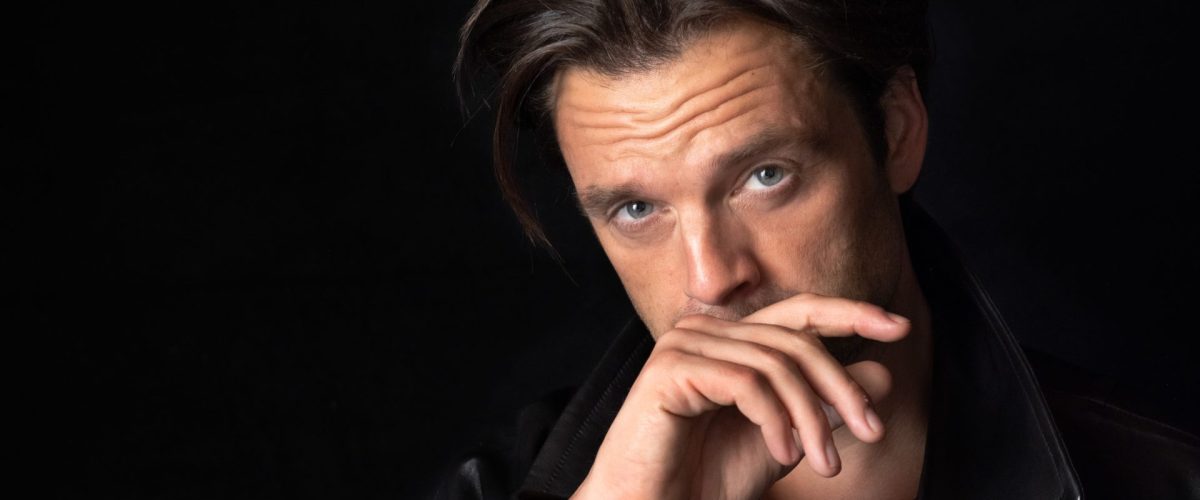
There aren’t many descriptors that can help visualise the spatial portrait of what goes on inside a virtual interview—especially so when you’re interviewing Sebastian Stan. He fills the display. As he leans forward over his desk, a yellow lamp catches the stray tousles of brown hair curling from beneath his cap. I opened with a question: how does he deal with the discomfort that comes from playing the characters that he does?

“I think discomfort is something we all have to deal with at various levels, but when it’s connected to work and art or being creative, it’s the kind of discomfort that I’m seeking,” he says.

Stan has built a reputation in the industry for being somewhat of a chameleon. Able to slip inside the skin of a controversial sex symbol with a soul patch in one moment, then trade that for another with an orange complexion belonging to an uncurbed president.

In one of his more recent projects, his character undergoes a radical medical procedure to reconstruct his face in Aaron Schimberg’s A Different Man, a performance that earned him a Best Actor in a Motion Picture—Musical or Comedy award at the Golden Globes. This change in physicality borders on the edge of metamorphosis, and naturally demanded a certain degree of emotional energy and vexation to fit into these characters.

For a man whose career may be known to many for playing a Marvel superhero, the road he’s taken since is quite unconventional. He has since leaned into independent cinema, television, and even playing characters that are deliberately hard to love.

Continue reading

May
24

News: Romanian Director Cristian Mungiu Wins His Second Palme d’Or at Cannes Film Festival for ‘Fjord’

Variety

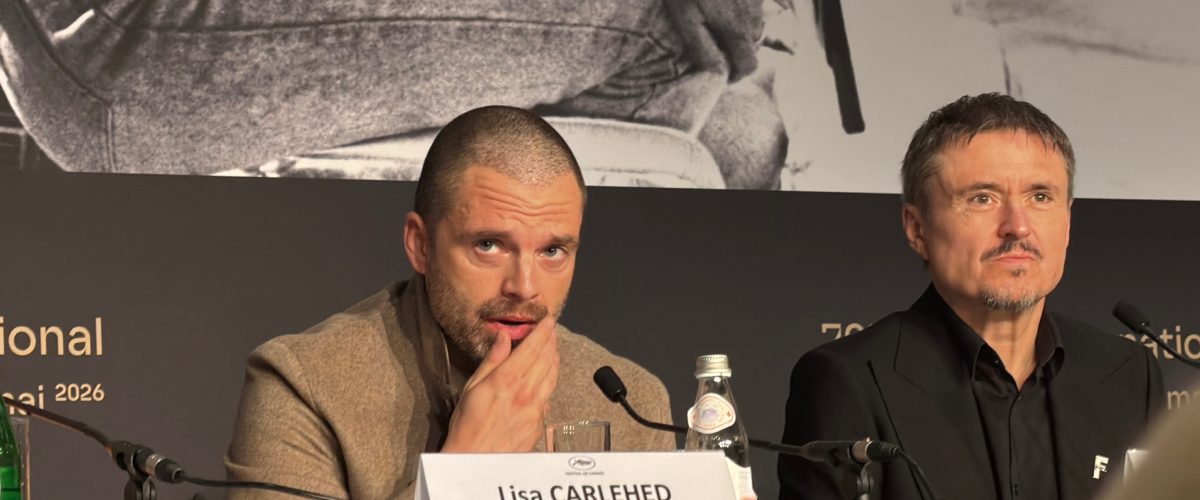
Cristian Mungiu‘s complex moral drama “Fjord,” starring Sebastian Stan and Renate Reinsve, has won the Palme d’Or for best film at the Cannes Film Festival, making the Romanian writer-director the tenth filmmaker to win the coveted award twice — 19 years after his first victory for “4 Months, 3 Weeks and 2 Days.” The film, about a Romanian family of Evangelical Christians mired in a child abuse case when they run afoul of the Norwegian social system, was among the more hotly debated titles in the Competition, with critics split on its merits and its sociopolitical allegiances — though evidently that very discussability united a jury headed by South Korean auteur Park Chan-wook.

Mungiu was typically self-effacing as he accepted the Palme. “All awards are contextual,” he said. “The fact that you gave me this award, it’s wonderful for us and we feel very happy, but we need to wait 10, 20 years to watch these films again, and maybe then we’ll understand which of them were really good, and managed to survive the test of time.” In the post-ceremony jury press conference, meanwhile, director Park wittily dodged the question of what motivated the Palme choice: “To be completely honest, I didn’t want to award the Palme d’Or to any of the films, because it’s an award that I myself have never gotten. But I had no other choice.”

This critic was among the admirers of the film (Mungiu’s first to be set and shot entirely outside his home country), describing it as a “superb new drama of systemic order and individual disarray [that] feels immediately of a piece with his searching, bristling oeuvre, despite its crisp new setting,” and praising Stan’s and Reinsve’s “measured, tightly clenched performances.” The win also represents a major coup for “Fjord’s” U.S. distributor Neon, which has now extended its Palme-winning streak to seven years running, beginning with eventual Oscar winner “Parasite” in 2019, and will certainly buoy their future awards hopes for Mungiu’s film.

The win wasn’t entirely expected: Many thought exiled Russian director Andrey Zvyagintsev, now based in France, would triumph for his icy anti-Putin neo-noir “Minotaur,” his first film in nine years, and a major comeback following a near-fatal battle with COVID a few years ago. In the end, Zvyagintsev had to be content with the Grand Prix, the fest’s second most prestigious award, but prospects look strong for the Mubi-backed title — a contemporary reworking of Claude Chabrol’s erotic thriller “The Unfaithful Wife,” set in Russia near the star of Putin’s war on Ukraine, but shot entirely in Latvia by political necessity.

In a heavily European-dominated slate of winners, the Best Director prize was shared by two oppositely styled historical visions: “Fatherland,” Polish director Pawel Pawlikowski’s meticulous evocation of post-war Germany, and “The Black Ball,” Spanish duo Javier Calvo and Javier Ambrossi’s sprawling, stylized, era-spanning ode to queer lives and loves lost to fascism, written through the prism of Federico Garcia Lorca’s poetry.

The tie provided the most amusing moment of the awards ceremony, with the confused shuffle of the three directors on stage prompting Pawlikowski to quip, “This is a piece of disastrous mise-en-scène!” But it also served up the two most stirring speeches of the night, with the Spanish filmmakers, known locally as Los Javis, overcome with emotion as they honored their queer antecedents: “The only way we can honor the suffering, the silence, the death of the LGBTQ people that came before us, is making sure that the next generation has the same freedom or more.”

Pawlikowski, meanwhile, spoke precisely and passionately about the need for a nuanced understanding of political cinema: “We live and breath politics, and cinema should reflect that, but not on terms dictated by politicians and activists: It takes courage to resist dictators and bullies, but it also takes courage to resist noise, algorithms, peer pressure. I think writers should be able to look beyond headlines, beyond information bubbles, beyond set narratives, and to talk about what they really feel, what they really see, what they really know, what they intuit. It’s important to keep that space free for art.”

Los Javis, meanwhile, weren’t the only duo honored on a night where collaborative artistry was especially celebrated. Both acting awards went to pairs of co-stars, with Frenchwoman Virginie Efira and Japanese star Tao Okamoto (the only non-European individual to take a prize from the jury, for a culture-melding French-Japanese production) sharing the Best Actress award for their exquisitely calibrated, conversational dual turn in Ryusuke Hamaguchi’s critical darling “All of a Sudden,” as a care home manager and experimental theater director who find a deep and unexpected bond through their respective lines of work.

Meanwhile, the two young stars of Belgian director Lukas Dhont’s First World War drama “Coward” — Valentin Campagne and newcomer Emmanuel Macchia — were stunned to jointly win Best Actor for their achingly sensitive portrayals of soldiers-turned-lovers on the Western Front. Their giddy, ebullient speech, as Campagne literally leaped into his co-star’s arms, was a joyful high in the ceremony.

German director Valeska Grisebach may have been the sole Jury Prize winner for her ambitiously experimental, documentary-influenced crime drama “The Dreamed Adventure,” but she didn’t see herself that way, calling her leading lady Yana Radeva onto stage as her most invaluable collaborator. Frenchman Emmanuel Marre, meanwhile, took Best Screenplay for another of the Competition’s most strikingly unconventional works, the fractured French Resistance drama “A Man of His Time.”

In something of a surprise, the Camera d’Or for best first feature across all sections of the festival went to Rwandan filmmaker Marie Clémentine Dusabejambo for her heartfelt debut “Ben’Imana” — a happy turnaround after the film was entirely blanked by the Un Certain Regard jury last night. It was a welcome triumph for African cinema on such a Eurocentric night.

Yet in a year where American films were conspicious by their general absence — the two U.S. Competition titles, James Gray’s “Paper Tiger” and Ira Sachs’ “The Man I Love,” both left empty-handed — the awards did encapsulate the major theme of this year’s festival: of film as a global, exploratory medium, with “Fjord,” “Minotaur,” “The Dreamed Adventure,” “Fatherland” and “All of a Sudden” all either addressing themes of displacement on screen, or made by filmmakers forging connections with new countries and national cinemas.
May
24

News: Sebastian Stan On ‘Fjord’ & ‘The Batman II’

Deadline

EXCLUSIVE: Sebastian Stan is that rare breed of actor who uses his star superpower to help get movies such as Cristian Mungiu’s Palme d’Or winner Fjord made – a film that explores topics of religious intolerance and violence towards children.

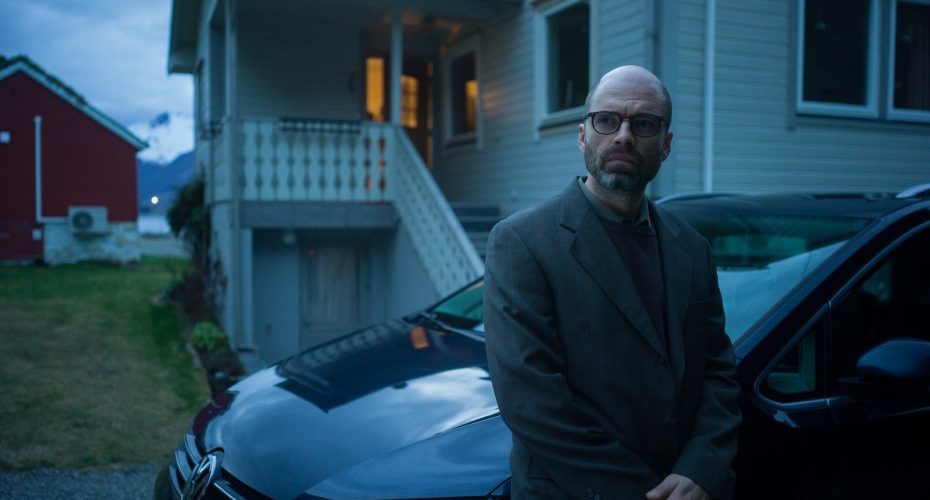
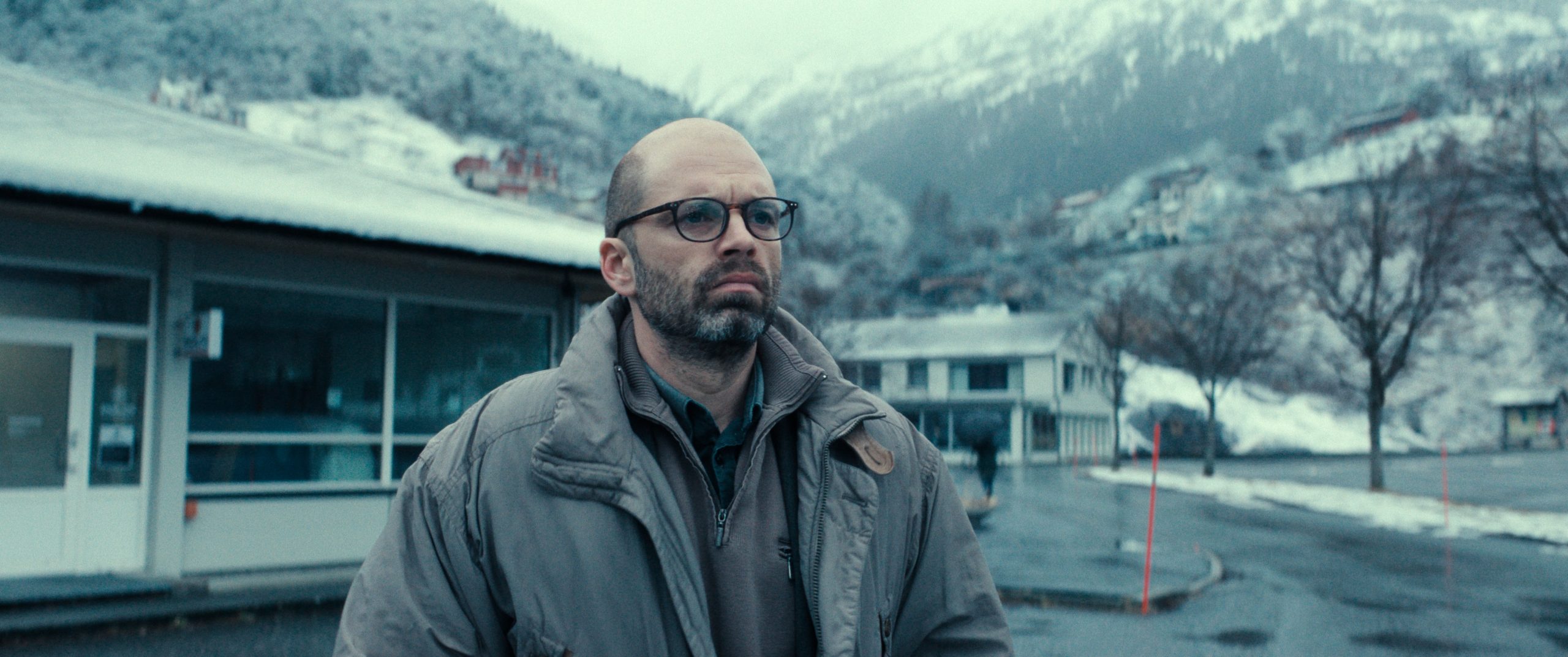
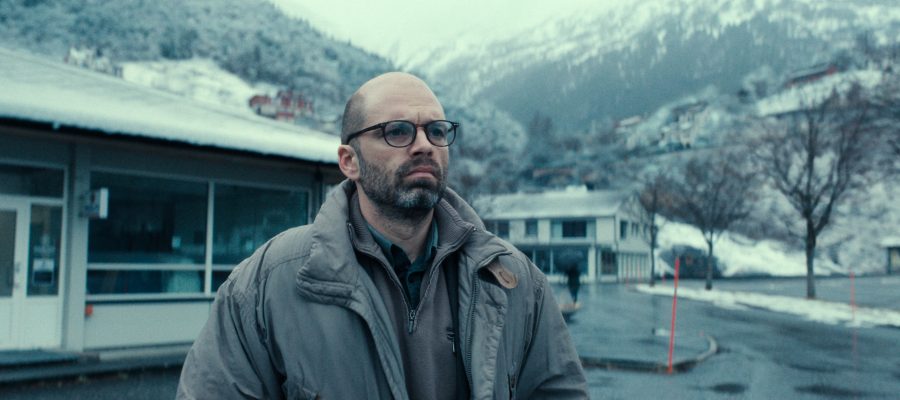
As a thespian, he will do whatever’s necessary for the character. For Fjord, he’s almost unrecognizable with his hair shaved down to his scalp and unflattering costumes that could’ve been made outta potato sacks.

Soon, he says, he’ll be in London (over summer) for Matt Reeves’ The Batman: Part II, where he’ll play “many roles in this one”

He’s referring to the character Harvey Dent, who starts off as Gotham’s crime-fighting District Attorney who descends into madness when underworld figure Sal “Boss” Maroni hurls acid in his face scarring the left side, hence the Two-Face moniker he takes up.

Having mastered the Marvel Cinematic Universe, this marks his first foray into WB’s Batman DC world.

”I’m excited, I’m nervous and trying to keep surprising myself,” he says of taking on Two-Face and working with the hair and makeup teams who have devised how his disfigurement will look.

We’ve met a few times, notably, here and at Telluride when he was travelling with The Apprentice film where he portrayed a young Donald Trump, a portrayal that garnered him a much deserved Best Actor Oscar nomination.

I can well imagine that Neon, which has Fjord in the U.S., will have the actor, and Renate Reinsve, who plays his wife in the film that’s set in small-town Norway [some might say small-minded Norway, parts of it anyway], on the next awards season cycle. In reality, the next awards season began Saturday night when the prizes were being handed out in the Grand Theatre Auditorium Louis Lumière.

Stan plays a Romanian family man who travels with his five children to live in his wife’s Norwegian hometown.

Their strong Christian beliefs become an issue with some locals and they’re accused of violence towards their children who are removed and placed with foster parents.

Having knowledge of fostering and violence towards children [my wife was once a communications director with the National Society for Prevention of Cruelty to Children], the movie struck a chord; I was totally captivated by it.

Stan says he thought it was “very brave of the jury to recognize the film in terms of just the questions it raises — this divisiveness, this inability to agree on anything and to me the film really speaks towards doubt, but not necessarily in a negative way, in a positive way that perhaps we should invite more doubt into our lives, not necessarily doubt in other people but doubting ourselves a bit and our own mindsets and our own belief systems — we could be wrong about other people. We just need to get away from extremism because it doesn’t work.“

When he came to live in the U.S. with his mother, having been raised in Romania, he was the age of the two older children in Fjord. “I was twelve and I have the most empathy for the children in the movie. All they want is to fit in and to be accepted. But when you’re an immigrant and you’re a kid, and you’ve got society telling you one thing and your parents are telling you another thing, where’s room for you [the kid] left in any of that?”

Hopefully, after he completes The Batman: Part II, he’ll take on another powerful, socially aware picture.

May
19

News: Sebastian Stan Slams Donald Trump and Says What’s Going on in America Is ‘Not a Laughing Matter’: ‘We’re in a Really Bad Place’

Variety

Two years after his Donald Trump biopic “The Apprentice” premiered at Cannes, Sebastian Stan reflected on the role during the press conference for his new movie “Fjord,” saying America is “in a really, really bad place.”

When the actor was asked his thoughts on “The Apprentice” — which premiered just before the 2024 election — now that Trump has been in office again for over a year, journalists in the room erupted into nervous laughter. But Stan responded: “It’s just not a laughing matter, to be honest. It isn’t.”

He continued, “I think we’re in a really, really bad place. I really do. And to be honest with you, when you’re looking at what’s happening, right — if we’re talking about the consolidation of the media, censorship, threats, the supposed lawsuits that seemingly never end but don’t actually go anywhere. You know, the writing was on the wall. We encountered all that with the movie.”

Trump attempted to halt the Ali Abbasi-directed “Apprentice” ahead of its Cannes premiere in 2024, threatening a lawsuit and calling the film “garbage” and “pure fiction.”

“Three days before the festival, [we were] unsure if the movie was going to play the festival,” Stan said. “So maybe people are paying attention more to that film, I think it will stand the test of time for that. But we went through all of it, right before Jimmy Kimmel and Stephen Colbert and so on. So, I wish it wasn’t like that.”

Stan’s latest movie, “Fjord,” rocked Cannes on Monday night with a 10-minute standing ovation. Directed by Romanian filmmaker Cristian Mungiu, the heart-wrenching family drama stars Sebastian Stan and Renate Reinsve as the parents of a Romanian family with strict religious beliefs who move to a small village in Norway. When bruises are noticed on their daughter’s body at school, their five children are taken away from them and a legal saga ensues.

The combination of Mungiu, Stan and Reinsve could be enough to earn “Fjord” the Palme d’Or. The director has already won the prestigious award once for 2007’s “4 Months, 3 Weeks and 2 Days,” and Reinsve was awarded the best actress prize for her performance in “The Worst Person in the World.” She was also at the festival last year with “Sentimental Value,” which won the grand prix and went on to score the best international feature Oscar.

May
12

News: Sebastian Stan On His Romanian Roots In ‘Fjord’, Fatherhood, Toxic Masculinity, Real-Life Heroes & ‘The Batman: Part II’ – Cannes Cover Story

Deadline

Note: For the accompanying photoshoot images click here: Session # 170 -Andrew Zaeh, for the screencaps of the behind the scenes click here: Photoshoot: Deadline Distruptors [Behind the Scenes] (2026), for the video click here.

In Cristian Mungiu’s Fjord, Sebastian Stan returns to his Romanian roots with a story that forces us to examine our prejudices, our assumptions, and the treatment of immigrants. Starring opposite Renate Reinsve, Stan once again plunges into a risky, thorny role with a look that belies his MCU star status. As he prepares for both fatherhood and playing a supervillain in The Batman: Part II, he’s focused on being one of the good guys.

Sebastian Stan has been thinking about men. He’s been reading a lot on the subject; studying it, if you will. What makes a good man? How can we support children and young people? What should we do about social media? All this prep is for a role of sorts, but not an acting one. Soon, he and his partner, actor Annabelle Wallis, will welcome their first child.

“I want to be a good dad,” he says simply.

We’re discussing his latest film Fjord, which will premiere in Competition at Cannes. Stan plays a man forced to contemplate his own value as a father and as a man — an experience that must now seem serendipitous, given the timing of his personal life.

Continue reading

Apr
24

News: Sebastian Stan: “Trauma either destroys you, gives you birth, or reborns you.”

culturaladuba-ro [Google Translate]

Note: To view the accompanying photos click here

“That’s your responsibility, to look at all the parts of yourself, even the ones you don’t like, the questions you’re afraid of, to see who you are, how you were made, and then ask yourself: okay, now what do you want to do with this? ”

Leaving. For an 8-year-old, leaving can be a concept that comes to mind far too early, especially if they are venturing into the unknown. However, it becomes bearable when they have a mother who is determined to give them a new life.

The departure is rooted in the story of Sebastian Stan’s life. He left Constan?a as a child, leaving behind his beloved grandparents and friends on the stairs of the apartment building. He arrived with his mother in Austria, then in America, in New York. So that later his acting career would involve other and other departures.

But today we will not talk about leaving, but about returning .

With an extraordinary capacity for transformation, choosing the most different scenarios possible, Sebastian Stan is now one of the most appreciated actors in Hollywood, winner of a Golden Globe and nominated for an Oscar. He has dual citizenship – American and Romanian.

And in just a few weeks, he will be seen acting for the first time in a Romanian film, Fjord , directed by Cristian Mungiu, where any cinema artist fits perfectly – at the Cannes Film Festival, in the official competition.

To get close to a celebrity like Sebastian Stan, you normally have to go through an army of agents, whether impresarios, publicists, or literally, security guards.

On the set of the film in Fjord , Norway, things were different. For more than a month, Stan took off his invisible superstar cape and integrated himself into the different layers of the film crew, made up of Romanians, Norwegians, Swedes and Finns.

Also normally, such a celebrity rarely gives interviews and only to major, internationally known publications.

The fact that Sebastian Stan decided to give his first interview in Romania, after his Oscar nomination, to a small publication like Cultura la dub?, says much more about him than about us. It is just one of the ways in which he puts his notoriety at the service of others, to support causes he believes in, causes that otherwise do not enjoy much support. With the same reasoning, he supported, as producer and financier, the debut feature film of a Romanian director – Malul Vân?t , by Andreea Bor?un.

The discussion with Sebastian Stan was as natural as possible and touched on personal topics, which help us see him beyond his acting career. From the searches of a child who woke up in a completely different world, to the 42-year-old adult who tries to find his true identity and his role on earth. All this, in the context of the painful loss of his father – “with my father I spoke only in Romanian, which had created a very special intimacy between us, like an invisible thread that was only ours.”

What role does film play in this whole story? It is the art through which Stan can most authentically contribute to a world torn by conflict. And it is also part of his own quest.

The interview took place in Norway, in April 2025, during a filming break. Sebastian chose to speak in Romanian, but in places some ideas were expressed in English.

The material also presents the first images of Sebastian Stan on the set of Fjord , captured by photographer Adi Bulboac for Cultura la dub.

Continue reading

Apr
09

News: ‘Fjord’ Official Synopsis + Instagram Film Page

Filmivast

Synopsis

Mihai and Lisbet Gheorghiu, a devout Romanian Norwegian couple, move from Romania to Norway with their children to be closer to Lisbet’s family. They quickly bond with their neighbors, the Halbergs: Mats is the school principal while his wife Mia is a retired lawyer. Mats’ daughter, Noora, is a rebellious adolescent but the friendship with her new neighbors starts changing her. When adolescent Elia Gheorghiu shows up at school with some bruises on her body, the community wonders if the strict, traditional education that the Gheorghiu children get would have anything to do with it.

As tensions grow, both families must confront their different views on family, freedom, and progress, raising a difficult question: Where does personal freedom end and society’s demand for conformity begin?

The instagram film page can be found here: Fjord the Film

Apr
07

News: The gesture made by Sebastian Stan, one of the most famous actors of the moment, for women in Romanian villages

hotnews.ro [Google Translate]

Actor Sebastian Stan financed the film “A River’s Gaze”, which brings a less stereotypical perspective on Romanian villages. Directed by Andreea Cristina Bor?un , the film explores the complex relationship between a single mother and her teenage son, amid labor migration, and offers a candid approach to the realities of rural life: “Many families are divided and this brings with it anger and frustration, issues that were very clearly shown to us in the fall of 2024, during the presidential elections, and that we should not close our eyes to or forget about,” says director Andreea Bor?un in an interview with the HotNews audience.

Continue reading

Apr
07

News: Andy Serkis Returning As Alfred In DC’s ‘The Batman II’

Deadline

Serkis will join a cast in Batman II that includes Robert Pattinson returning as the Caped Crusader, Colin Farrell as The Penguin, Scarlett Johansson, and Sebastian Stan as Harvey Dent.

Feb
24

News: Inga Ibsdotter Lilleaas Takes Sebastian Stan Inside the Whirlwind of Awards Season

Interview Magazine

By Sebastian Stan
Photographed by Danny Lim
February 24, 2026

The path to Hollywood isn’t a yellow brick road. Starting from a small village in Norway, Inga Ibsdotter Lilleaas made several detours: after being rejected from Norway’s top acting school, she joined an exchange program in Brazil, studied psychology for a year, spent a semester at New York’s Lee Strasberg Theatre and Film Institute, and then returned to Norway, where her parents run a theater production company. And now, at 36, Ibsdotter Lilleaas is a first-time Oscar nominee for her quietly affecting turn as Agnes in Joachim Trier’s Sentimental Value, where she and Renate Reinsve play sisters navigating the prospect of reconciliation with their estranged filmmaker father (played by Stellan Skarsgård). The film’s meta-commentary on memory, trauma, and filmmaking itself has captured the hearts of audiences and critics—each of its lead actors are nominated for Academy Awards, as well as Trier for his direction. As Insdotter Lilleaas approached the final leg of her very first awards circuit, Sebastian Stan put her in the hot seat to reflect on a number of pinch-me moments, from meeting Susan Sarandon to being called the year’s best “special effect” by none other than Paul Thomas Anderson.—SIMON DWIHARTANA

Continue reading